



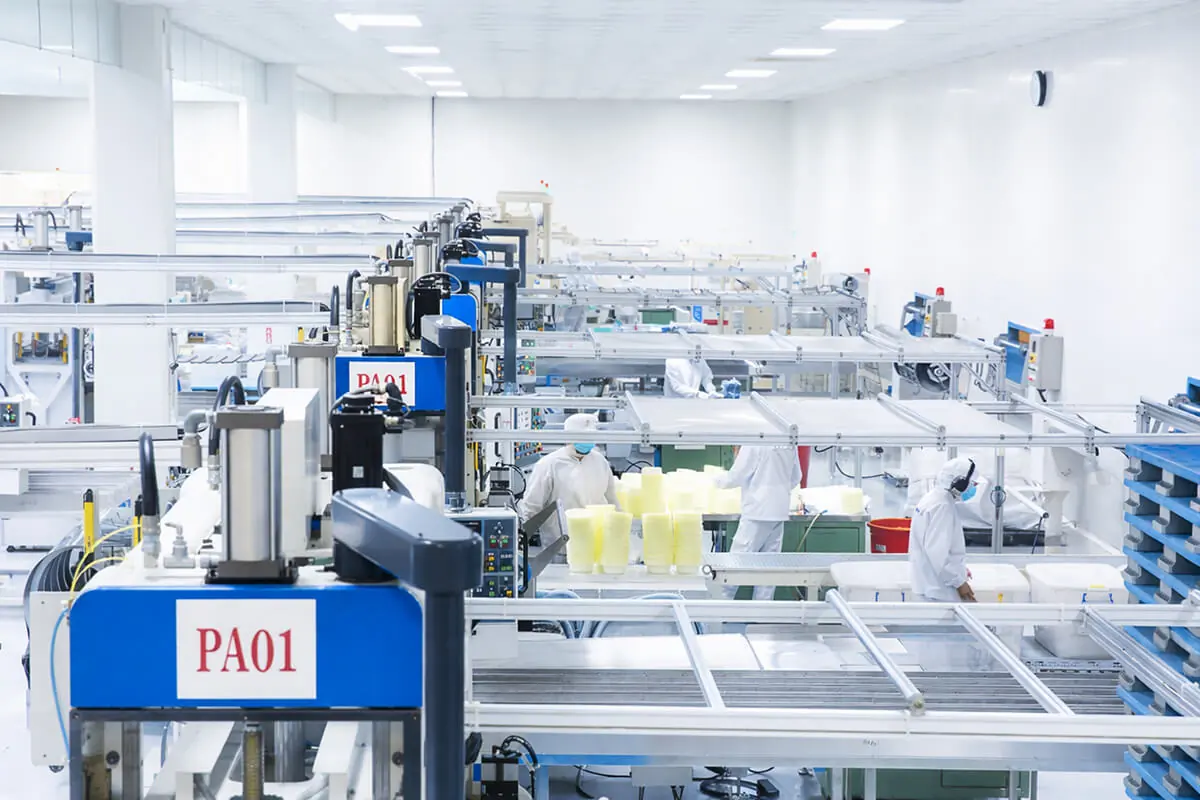
Every plastic food container on a supermarket shelf started as a flat sheet of plastic. Thermoforming is the process that turns that sheet into the clamshell holding your strawberries, the deli tub packed with pasta salad, the sealed tray keeping a ready meal fresh for five more days. At SPI, we have been thermoforming food packaging since 1983. This guide covers how the process works, what materials go into food-grade containers, and what to look for when choosing a thermoforming manufacturer.
Table of Contents
What Is Thermoformed Food Packaging?
Thermoforming is a manufacturing process where a plastic sheet is heated until it becomes pliable, then formed into a specific shape using a mold. For food packaging, that shape is usually a container, tray, lid, or clamshell designed to protect, display, and preserve a food product.
How the Process Works
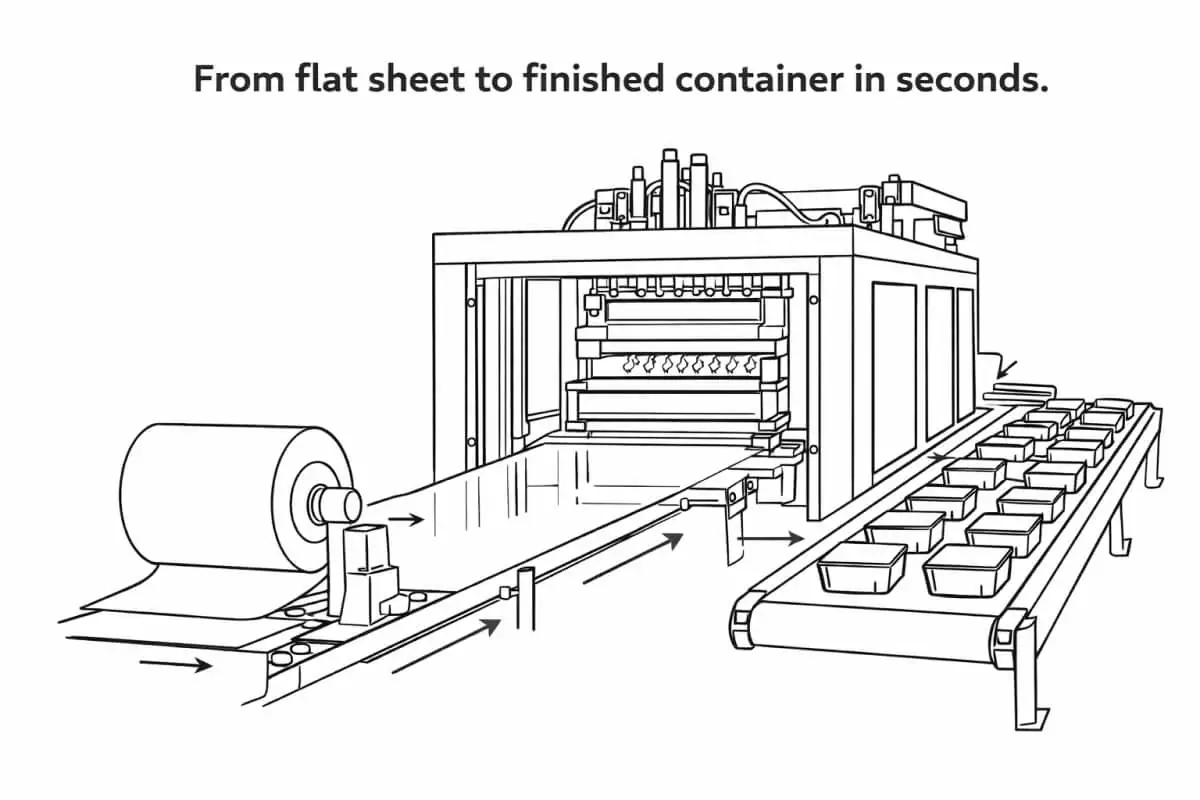
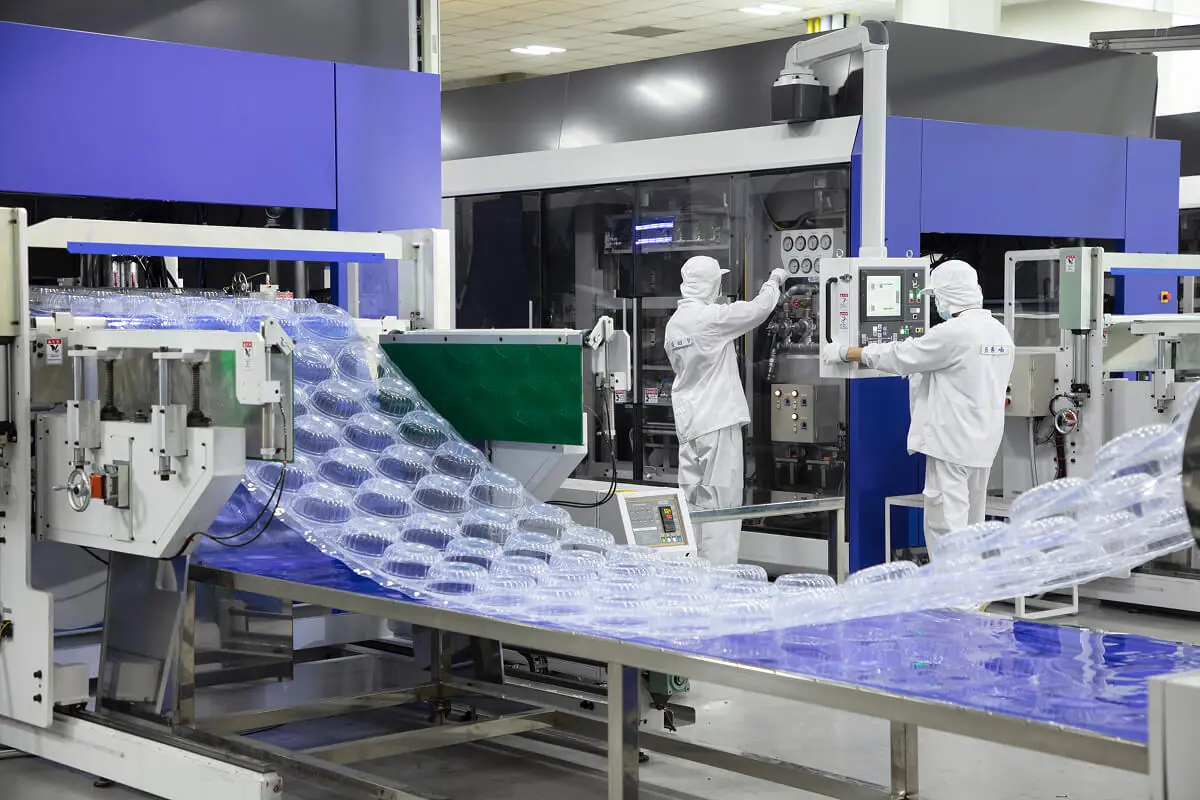
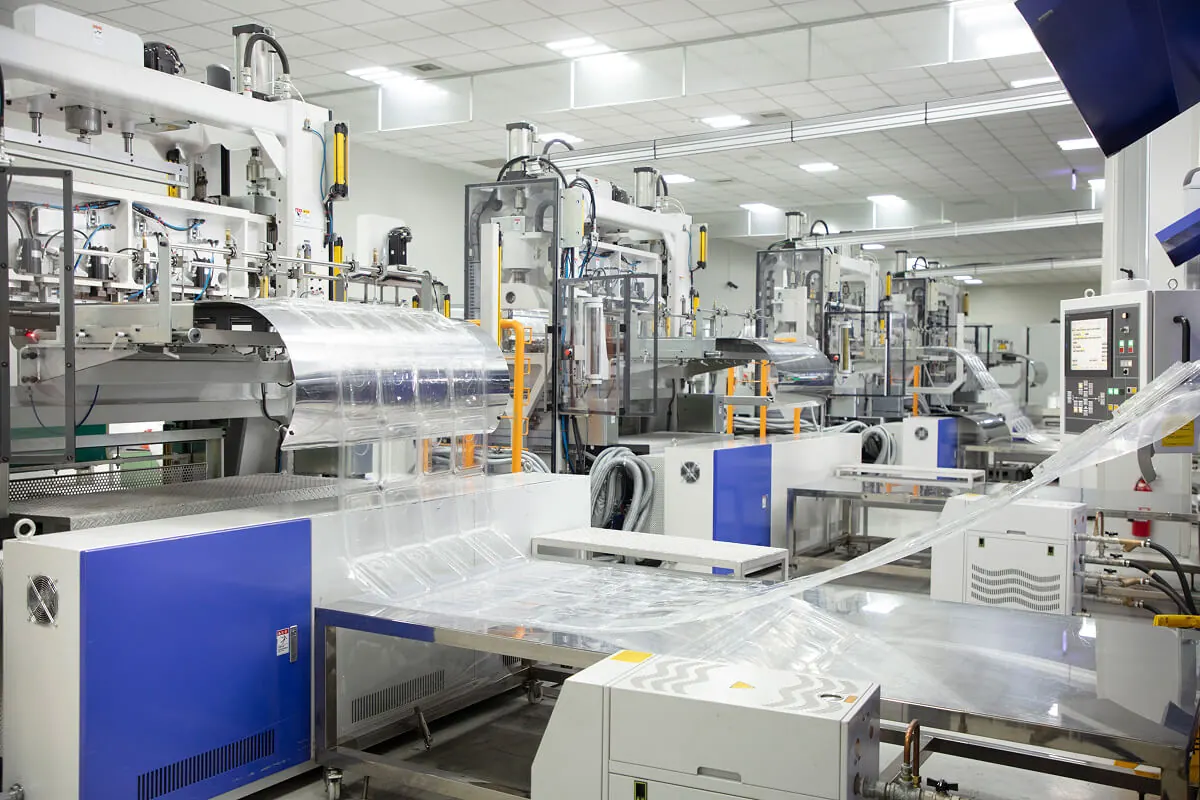
Here is how it works in practice. A roll of extruded plastic film, typically PET or PP, feeds into the thermoforming machine. The sheet passes through an oven where it is heated to forming temperature. PET usually forms at around 266 to 320°F (130 to 160°C) depending on thickness and grade. The softened sheet then moves to a forming station where vacuum pressure, mechanical pressure, or a combination of both pulls and pushes the material against a mold. The plastic cools in the shape of the mold, gets trimmed from the surrounding sheet, and stacks for inspection and packing.
The whole cycle takes seconds. A single thermoforming line can produce thousands of containers per hour, which is one reason thermoformed packaging dominates the food industry. It is fast, the tooling costs less than injection molding, and the process handles a wide range of container shapes and sizes without retooling the entire line.
Why Wall Thickness Matters
One detail that matters more than most buyers realize: wall thickness. As the plastic stretches over the mold, it thins out. Deeper containers with steep walls thin more than shallow trays. The ratio between the depth of the container and the width of the opening, called the draw ratio, determines how evenly the material distributes. Getting this right is the difference between a container that holds up on a retail shelf and one that cracks when a customer picks it up. It is also why mold design and forming parameters need to be dialed in for each specific container, not just copied from a generic template.
Why Vertical Integration Matters
At SPI, we control the entire process from sheet extrusion to thermoforming under one roof. We extrude our own PET and PP sheet, which means we can adjust material thickness, color, and composition before it ever reaches the forming machine. Most thermoforming companies buy pre-made sheet from a supplier and work with what they get. Vertical integration gives us more control over the finished product and keeps costs lower.
👉 Learn more about our production process.

Materials Used in Food-Grade Thermoforming
Not every plastic can be thermoformed into food packaging. The material needs to meet food contact safety regulations, hold its shape after forming, and perform under the conditions the food demands. A salad container sitting in a refrigerated case has different requirements than a meal tray going into a microwave.
PET (Polyethylene Terephthalate)
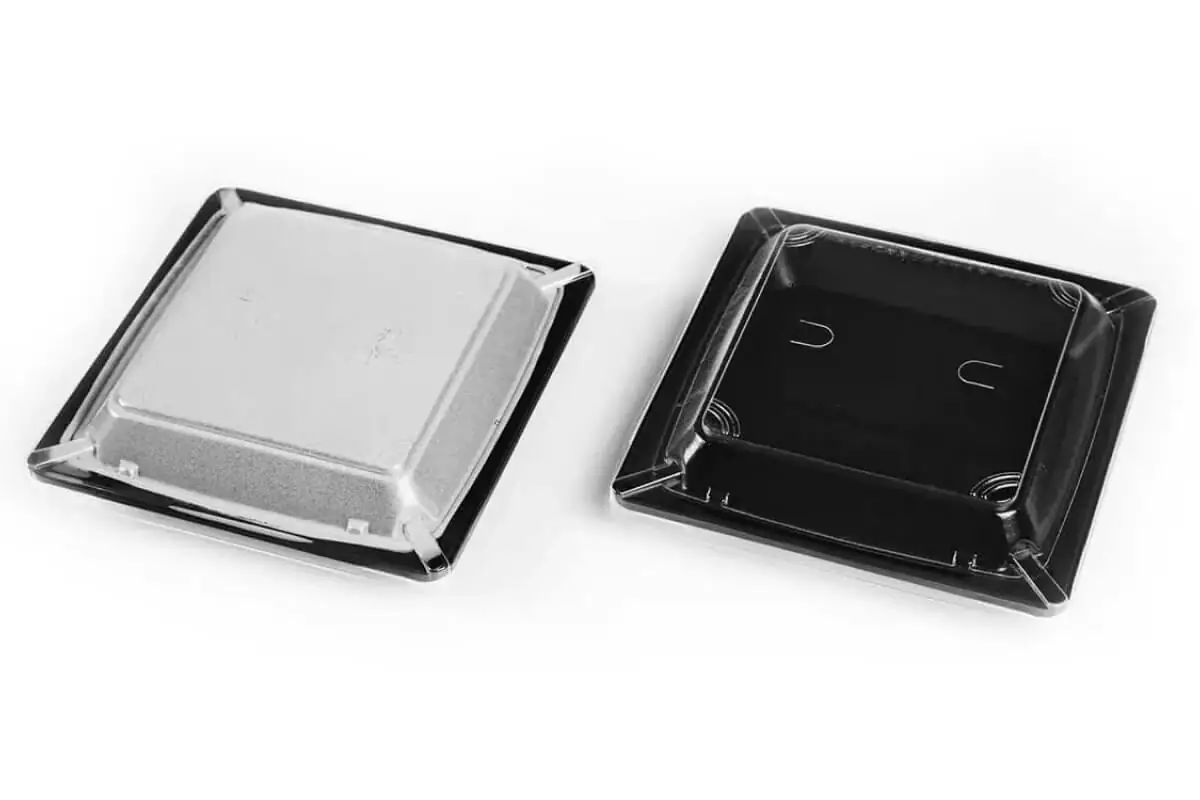
PET (Polyethylene Terephthalate) is the most widely used material in thermoformed food packaging. It is strong, lightweight, and offers the kind of clarity that makes food look good on a shelf. PET is also one of the easiest plastics to recycle, which matters more every year as retailers and regulators push for higher recycling rates. We use PET for our clear food containers, tamper-evident clamshells, and sushi trays.
PP (Polypropylene)
PP handles heat in ways PET cannot. PP containers are microwave-safe, which makes them the right choice for ready meals, takeout, and anything a consumer might reheat. PP is also chemical-resistant and holds up well against fats and oils. We thermoform PP for our HC line of microwave-safe tamper-evident containers and for applications where heat resistance is a requirement.
rPET (Recycled PET)
rPET is post-consumer recycled PET, sourced from used bottles and containers that have been collected, cleaned, and reprocessed into new sheet. Using rPET reduces the demand for virgin plastic and keeps existing PET out of landfill. SPI offers thermoformed food packaging with 30%, 50%, 70%, or 100% PCR rPET content, verified by SCS Global certification and GRS (Global Recycled Standard) certification.
Bio-PP and Chemically Recycled rPET
Bio-PP and chemically recycled rPET are newer options in our material lineup. Bio-PP is polypropylene derived from non-edible plant sources, so it does not compete with food crops. Chemically recycled rPET goes through a depolymerization process that brings the material back to near-virgin quality, with better clarity and impact performance than typical mechanically recycled rPET. Both are certified under ISCC PLUS through mass balance traceability and available as part of our respire recycled PET program.
What Makes Food-Grade Thermoforming Different
Thermoforming a plastic tray for shipping electronics and thermoforming a container that holds someone’s lunch are not the same job. Food packaging has a layer of requirements on top that changes how you design, produce, and certify the product.
Food Contact Compliance
The first requirement is food contact compliance. Every material that touches food needs to meet safety regulations, and those regulations vary by market. FDA compliance covers the US. EU regulations apply across Europe. Japan, Australia, and other markets each have their own standards. At SPI, we hold a Declaration of Compliance covering food contact materials across multiple jurisdictions. Our PET, PP, and rPET materials are all tested and approved for direct food contact by third-party labs.
Production Certifications
The second requirement is production environment. A BRCGS Packaging certification means the factory meets strict hygiene, contamination control, and traceability standards specifically designed for food packaging manufacturing. We also operate under HACCP for food safety management, ISO 22000, ISO 9001 for quality, and ISO 14001 for environmental management. These are not optional extras. Most major supermarket chains and food brands will not source from a manufacturer without them.
👉 View all SPI certifications including BRCGS, HACCP, ISO 22000, ISO 9001, ISO 14001, and ISO 50001.
Tamper Evidence
Then there is tamper evidence. This is where food packaging diverges sharply from other thermoformed products. Consumers need to see whether a container has been opened before they bought it. Our patented tamper-evident locking system is built into the container design itself. It shows clear visual evidence of opening, and it does this without a tear-off strip. That matters because tear-off strips become litter, they complicate recycling, and they add a component that can fail. Removing the strip also means the container can be reclosed and reused after opening, which consumers increasingly expect.
Anti-Fog and Clarity
Anti-fog coating is another food-specific requirement that most people outside the industry overlook. When a cold container sits in a refrigerated display case, condensation forms on the inside of the lid. Without anti-fog treatment, the lid fogs up and the consumer cannot see the food. For salad containers, deli items, and fresh produce, visibility drives purchasing decisions. We apply anti-fog coatings on both PET and PP containers to keep the product visible throughout its shelf life.
Microwave Compatibility
Microwave compatibility matters for any container going into a ready meal or takeout application. PET cannot handle microwave temperatures, so these applications require PP. But not all PP thermoforming is equal. The container needs to maintain its structural integrity when heated, resist warping, and keep its seal if it has one. Our PP microwave-safe containers are tested to perform through reheating cycles without deforming or releasing the lid.
Sustainability in Thermoformed Packaging
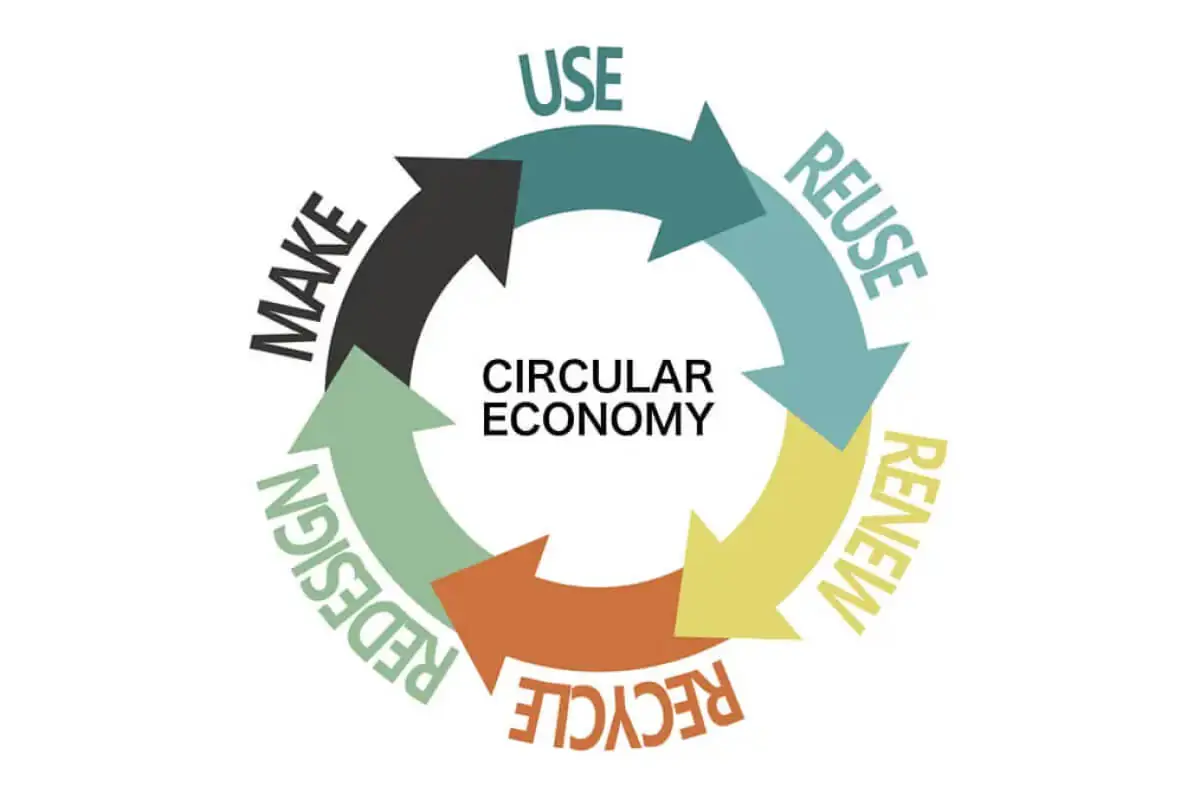
Recycling targets and extended producer responsibility laws are changing how food packaging buyers evaluate suppliers. The material a container is made from matters, but so does whether the manufacturer can prove its sustainability claims with actual certification.
Certified Recycled Content
SPI produces thermoformed food packaging using PCR rPET at verified content levels from 10% up to 100%. These percentages are not self-reported. They are certified by SCS Global Services and verified under the Global Recycled Standard (GRS), which tracks recycled content through the entire supply chain from collection to finished product.
We also offer two additional material pathways. The first is Bio-PP made from non-edible plant-derived feedstock. The second is chemically recycled rPET, which recovers post-consumer PET waste through depolymerization rather than mechanical grinding. Both are tracked through mass balance accounting, meaning the certified volume entering production matches what is claimed on the finished packaging.
Waste Reduction in Manufacturing
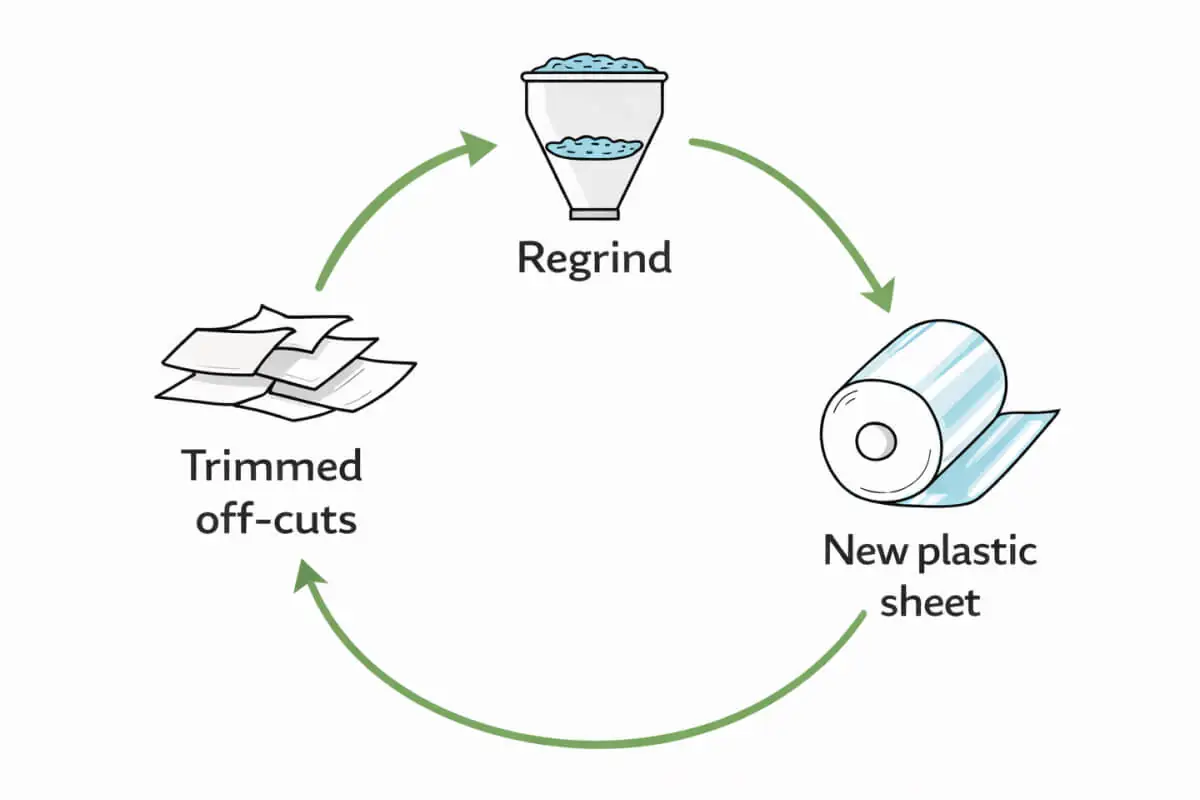
Beyond materials, our manufacturing process is designed to minimize waste at the source. Thermoforming generates trimmings and off-cuts from every production cycle. Instead of sending those to an external recycler or to waste, we regrind them in-house and feed them back into our extrusion line. This in-loop recovery system means our production scrap stays in our facility and goes back into new sheet, not into a waste stream.
Lightweighting and Recyclability
All SPI thermoformed food packaging is 100% recyclable. We do not manufacture any product that cannot be recycled. Our design approach also focuses on lightweighting, reducing material thickness wherever structural performance allows. One redesign for a customer reduced wall thickness by 0.02mm and cut total material use by 3.7% without compromising the container’s strength or appearance after heating.
👉 Learn more about our sustainability programs including respire, our 100% recycled PET product line, and our environmental focus.
Choosing a Thermoformed Food Packaging Manufacturer
Not all thermoforming manufacturers are set up for food packaging. Some specialize in industrial trays or medical device packaging and treat food containers as a side business. If food packaging is your core need, the manufacturer you choose should reflect that.
Vertical Integration
Start with vertical integration. A manufacturer that controls sheet extrusion and thermoforming in the same facility can adjust material formulation, thickness, and color without relying on a third-party supplier. That means faster prototyping, tighter quality control, and lower costs. If the manufacturer buys pre-made sheet, they are limited to what their supplier offers and any changes add lead time.
Material Range and Flexibility
Check their material range. Can they run PET, PP, and rPET? Do they offer certified recycled content at multiple percentage levels, or just one standard option? If your sustainability roadmap requires increasing recycled content over time, you need a manufacturer who can scale with you rather than one who locks you into a single material.
Certifications
Certifications tell you what the factory actually does, not what the sales team says it does. BRCGS Packaging, HACCP, and ISO certifications are the minimum for any serious food packaging manufacturer. If you need verified recycled content, ask for SCS, GRS, or ISCC PLUS certification. If they cannot show you the certificate, move on.
Tooling, Prototyping, and Supply
Ask about tooling and prototyping. How long does it take to go from a design concept to a production-ready sample? Manufacturers with in-house mold design and rapid prototyping can turn this around in weeks. Those who outsource tooling will take longer and give you less control over the result.
Think about supply reliability too. A manufacturer serving North America, Europe, and Asia from a single production base needs proven logistics and consistent output. Ask about production capacity, lead times, and how they handle demand spikes. A factory that runs at 95% capacity all the time has no room to absorb your urgent order.